Crow Agent Suite: Singapore Real Estate CRM, Agent Website, and Market Intelligence
Written by Daniel Alonso · 6 May 2026
Singapore real estate work has become more digital, but many agents still run the business from a patchwork of tools. A website sits in one place. Leads come from portals, referrals, WhatsApp, open houses, and social media. Contacts sit in a phone, spreadsheet, generic CRM, or personal notebook. Market evidence comes from HDB, URA, CEA, agency tools, PDFs, saved screenshots, and ad hoc searches. Follow-ups depend on memory, calendar reminders, and the discipline to update everything after each viewing or client call.
That fragmentation matters. Real estate agents are not only selling listings. They are building trust, explaining price context, managing client expectations, documenting preferences, tracking negotiations, coordinating follow-ups, and presenting themselves professionally in a competitive market. When the workspace is scattered, every client conversation takes more effort than it should. A buyer asks whether a price is reasonable, and the agent has to jump between transaction records, map tools, previous chats, and their own memory. A seller asks how the market has moved in the town, project, or district, and the agent needs to collect evidence quickly enough to keep the conversation useful. An agency wants consistency across a team, but each person has their own spreadsheet layout and contact workflow.
Crow Agent Suite exists to solve that operating gap. It combines a real estate agent website, editable CMS, property agent CRM Singapore workflow, Singapore property market intelligence, calculators, and an AI assistant for real estate agents in one workspace. It is designed for the practical daily work of Singapore agents and agencies, not as a generic sales database with a property label attached.
This guide explains what Crow Agent Suite does, who it is for, and why it matters for agents, teams, and agency-owned deployments in Singapore.
Index
- What Crow Agent Suite is
- Why Singapore agents need a more connected workspace
- Agent website and real estate CMS Singapore
- CRM built for real estate work
- Property market intelligence for Singapore
- AI assistant and calculators
- Who Crow Agent Suite is for
- Why it matters for agencies
- Privacy, security, and tenant boundaries
- Pricing and starting point
- FAQ
- Final view
What Crow Agent Suite is
Crow Agent Suite is a software workspace for Singapore real estate professionals. At a high level, it brings four parts of the agent business together:
- A public real estate agent website with a CMS for profile content, listings, testimonials, awards, photos, sections, analytics, and domain management.
- A real estate CRM for contacts, deals, follow-ups, property inventory, commissions, and pipeline analytics.
- A property market intelligence layer that brings Singapore public datasets, HDB resale analytics, HDB rentals, URA transactions, new launch records, CEA transaction history, price indices, comparable transactions, location intelligence, and data provenance into the same product.
- Agent tools, calculators, and AI assistance that help agents work faster while keeping client context and market evidence close to the conversation.
The important point is not that each category exists as a feature list. Many agents already have a website provider, a spreadsheet, a phone contact list, a calculator bookmark, and some market research tabs. The value is that Crow Agent Suite connects the public brand, private client workflow, market evidence, and client communication surface. That makes it easier to answer questions, follow up consistently, and present a professional digital presence without rebuilding the same context every day.
Why Singapore agents need a more connected workspace
Singapore real estate is information heavy. HDB resale prices, HDB rental contracts, private residential caveats, developer sales, price indices, vacancy signals, planning areas, schools, MRT stations, and salesperson transaction history all shape how clients evaluate a property decision. Clients may not know the exact dataset names, but they know what they need from an agent. They want a clear answer to questions such as:
Is this asking price supported by nearby transactions?
How have similar flat types in this town performed recently?
Are there comparable private transactions around this address?
What is the difference between a new launch story and actual resale evidence nearby?
Can I afford this purchase after stamp duties and financing constraints?
Has this agent handled similar property types or districts before?
Generic CRMs are usually weak in these moments. They can store a name, email, lead source, and sales stage, but they do not understand the evidence base of Singapore property. A spreadsheet can be flexible, but it does not make a website more credible, maintain a follow-up workflow, or connect market analytics to the client record. A standalone website can look professional, but it does not help with deal stages, commissions, or HDB resale analytics.
Crow Agent Suite is built around the reality that the agent workspace has to support both trust and execution. Trust comes from presentation, evidence, and responsiveness. Execution comes from CRM discipline, follow-up visibility, pipeline clarity, and repeatable workflows. When those parts are connected, agents spend less time stitching information together and more time advising clients.
Agent website and real estate CMS Singapore
An agent's website is often the first owned digital asset a prospect sees. Property portals are useful, but they do not belong to the agent. Social media is useful, but it is built around feeds. A personal website gives an agent a stable, professional link for introductions, WhatsApp profiles, business cards, listing decks, email signatures, and referral conversations.
Crow Agent Suite includes a website layer and CMS built for real estate agents. The CMS is intended to make routine updates possible without asking a developer to change every detail. Agents can maintain profile information, listings, testimonials, awards, photos, page sections, and analytics-related content from the product workspace. The product also supports domain management so agents can connect and verify a professional domain for their public presence.
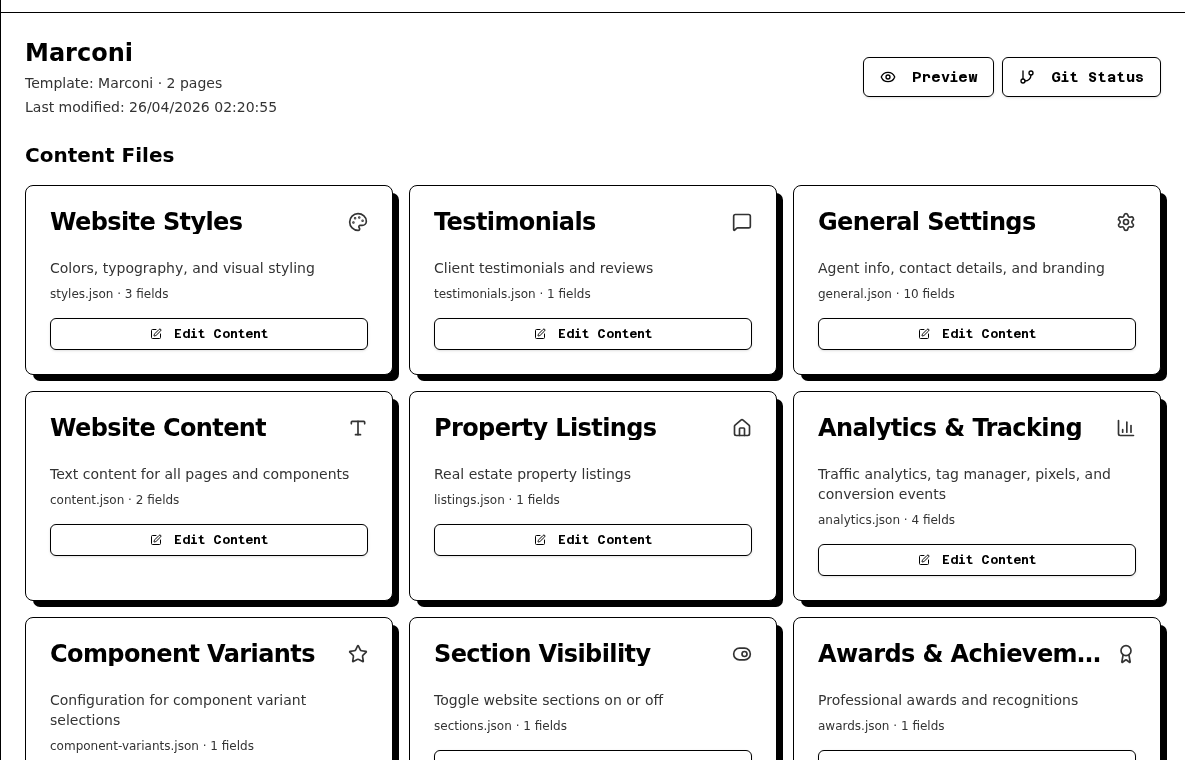
This matters because a real estate agent website should not be treated as a one-time brochure. It should evolve as the agent closes transactions, adds testimonials, changes focus areas, updates listings, and improves positioning. A website that is never updated sends the wrong signal. A CMS that is too technical becomes another abandoned tool.
For SEO, the website gives agents a clearer foundation than relying only on platform profiles. Search demand is often practical and location-specific. Prospects may search for an HDB resale agent, condo agent, property valuation help, seller agent, buyer agent, or district-focused property advice. A structured website gives the agent a place to publish service pages, listings, market explainers, and contact paths that can be indexed and shared.
That is why the website and CMS are not separate from the CRM. The public site is where attention turns into an inquiry. The CRM is where the inquiry becomes a follow-up, deal, viewing, negotiation, or long-term relationship.
CRM built for real estate work
A strong real estate CRM should help agents answer a simple question every morning: who needs attention next, and what is the context?
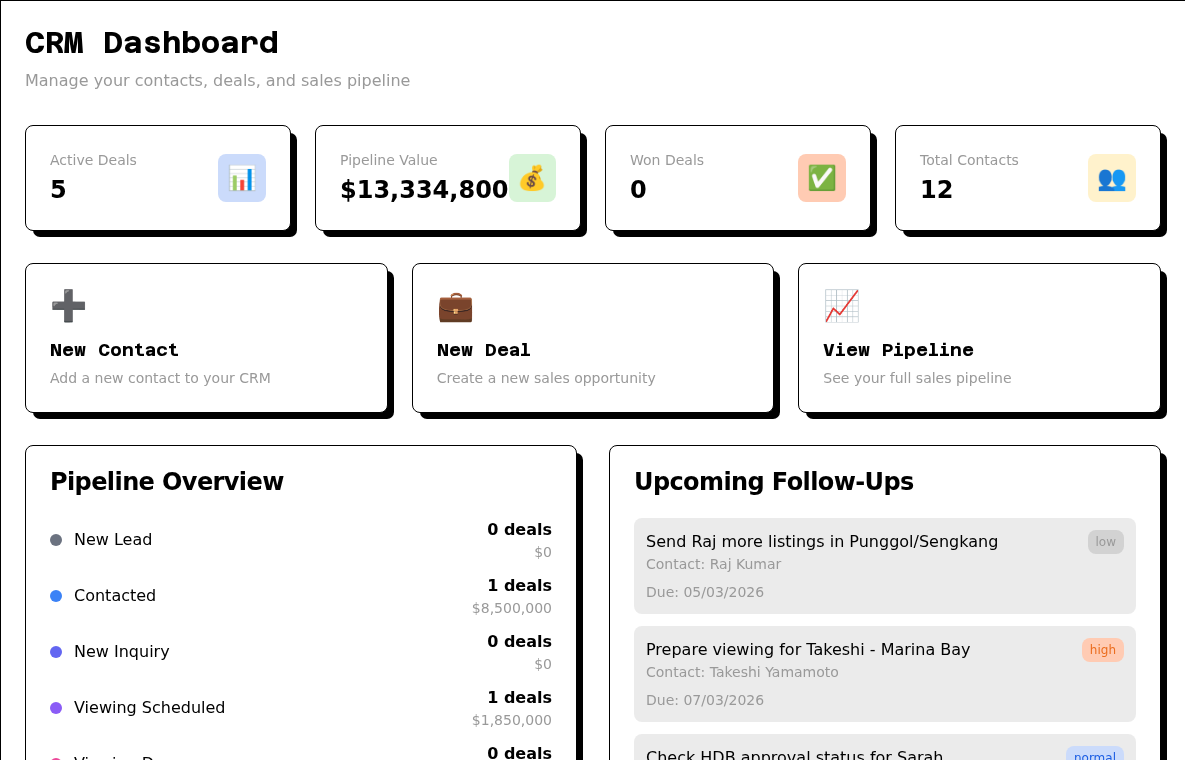
Crow Agent Suite includes CRM views for contacts, deals, follow-ups, property inventory, commissions, and analytics. Contacts can represent buyers, sellers, tenants, landlords, investors, and referral relationships. Deals can move through stages instead of living in a static spreadsheet. Follow-ups and tasks keep callbacks, viewings, reminders, and next actions visible. Property inventory gives agents a way to manage properties connected to contacts, deals, listings, and activities. Commission tracking helps agents understand expected earnings, deal value, deductions, and gross commission.
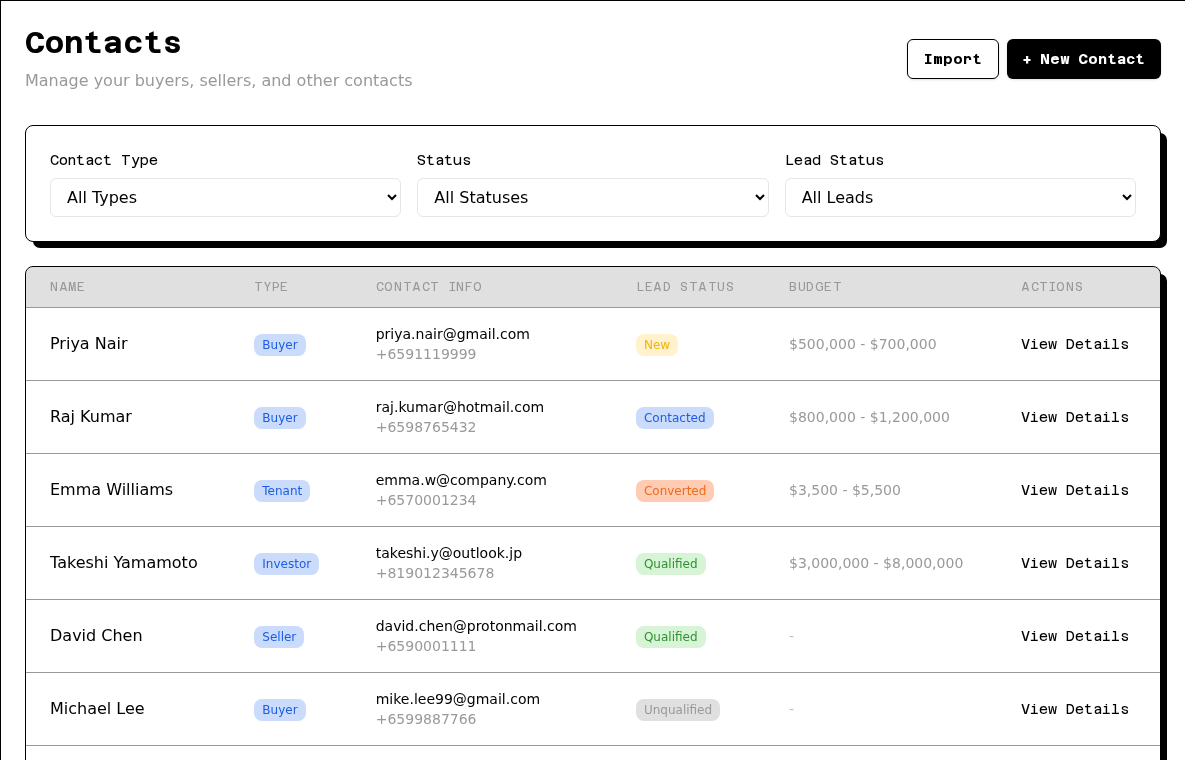
That mix is specific to agent work. A buyer lead is not just a lead. The useful fields may include budget, desired towns, property type, financing readiness, move-in timing, school requirements, and previous conversations. A seller is not just an account. The useful context may include expected price, loan status, property timeline, renovation details, viewings, market feedback, and comparable evidence. A tenant, landlord, upgrader, investor, or HDB owner each brings a different workflow.
The CRM analytics layer helps agents and teams see more than activity volume. Pipeline value, conversion patterns, lead sources, active deal stages, and performance indicators can reveal where business is actually moving. For individual agents, that can improve discipline and forecasting. For teams and agencies, it can make coaching and workload visibility more concrete.
The product page also points to protected CRM fields and sensitive CRM workflows. That distinction is important. A real estate CRM contains client phone numbers, budgets, intentions, deal notes, and personal circumstances. Crow Agent Suite should be evaluated as an operational system, not just a marketing tool. Agencies considering business or custom deployments should review role design, tenant boundaries, data access, and internal security requirements before rollout. The right claim here is practical and cautious: the suite is designed to support protected CRM workflows, but any formal security requirement should be reviewed directly with Crow Tech for the specific deployment.
Property market intelligence for Singapore
The strongest reason Crow Agent Suite is different from a generic CRM is the Market Intelligence module. Singapore property advice is evidence-based. Agents need to move between HDB data, URA data, CEA records, maps, comparable transactions, calculators, and client notes. Crow Agent Suite brings these workflows into the same product family.
The Market Intelligence area includes HDB resale analytics, HDB rental analytics, private residential transactions from URA caveats, new launch pipeline records, private development browsing, CEA transaction history, price indices, comparable transaction search, location intelligence, and data source provenance.
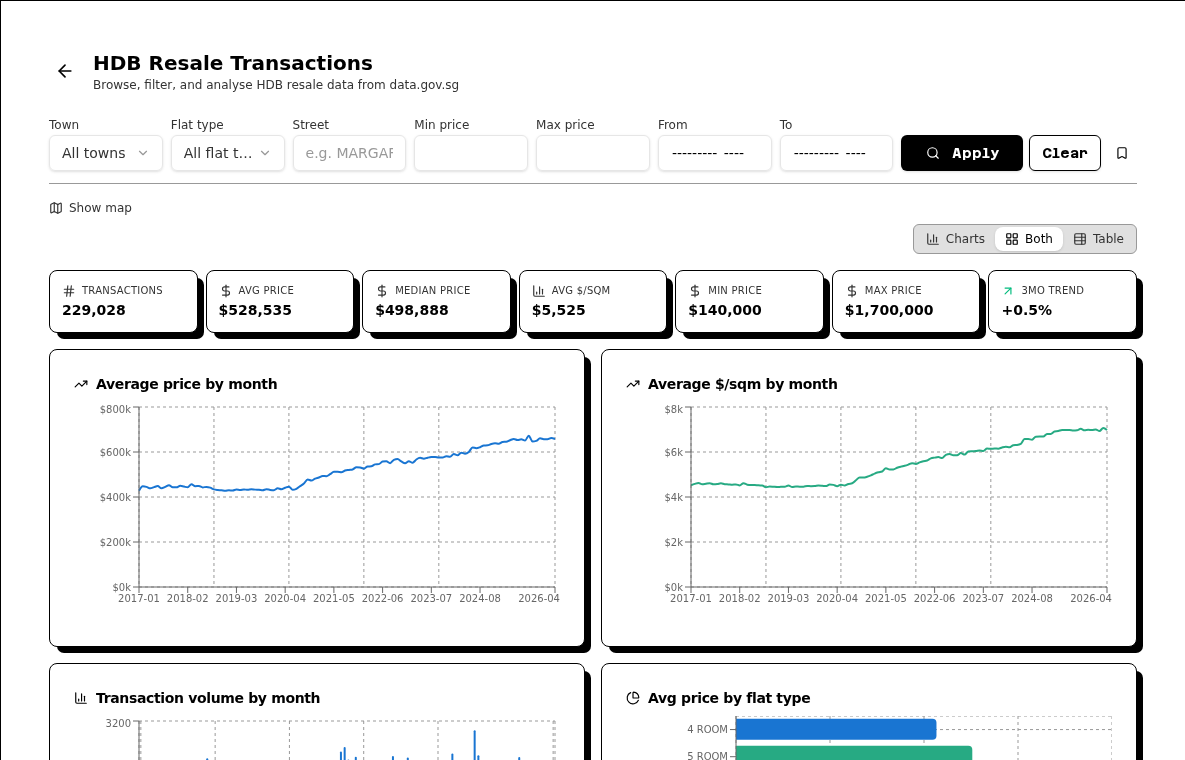
For HDB resale analytics, the practical use case is not just browsing average prices. Agents need to understand transaction volume, flat type trends, town patterns, and recent comparable evidence. A seller may ask whether their expected price is realistic. A buyer may ask whether a flat is overpriced. A family may compare towns based on size, age, lease, schools, and transport. HDB resale analytics gives the agent a way to ground that discussion in recent market data.
For private residential work, URA transactions and developer sales matter. Condo, apartment, landed, and new launch discussions often require a different evidence base from HDB conversations. A buyer may compare resale caveats around a project. An investor may want to understand new launch uptake and pricing. A seller may want to know whether nearby transactions support a target price. Market Intelligence gives agents a faster route from question to supporting evidence.
CEA transaction history can also be useful when prospects assess agent experience. Public transaction history does not tell the full story of an agent's capability, but it can provide context around property types and transaction activity. In Crow Agent Suite, CEA history sits beside other market tools rather than forcing agents to search separately.
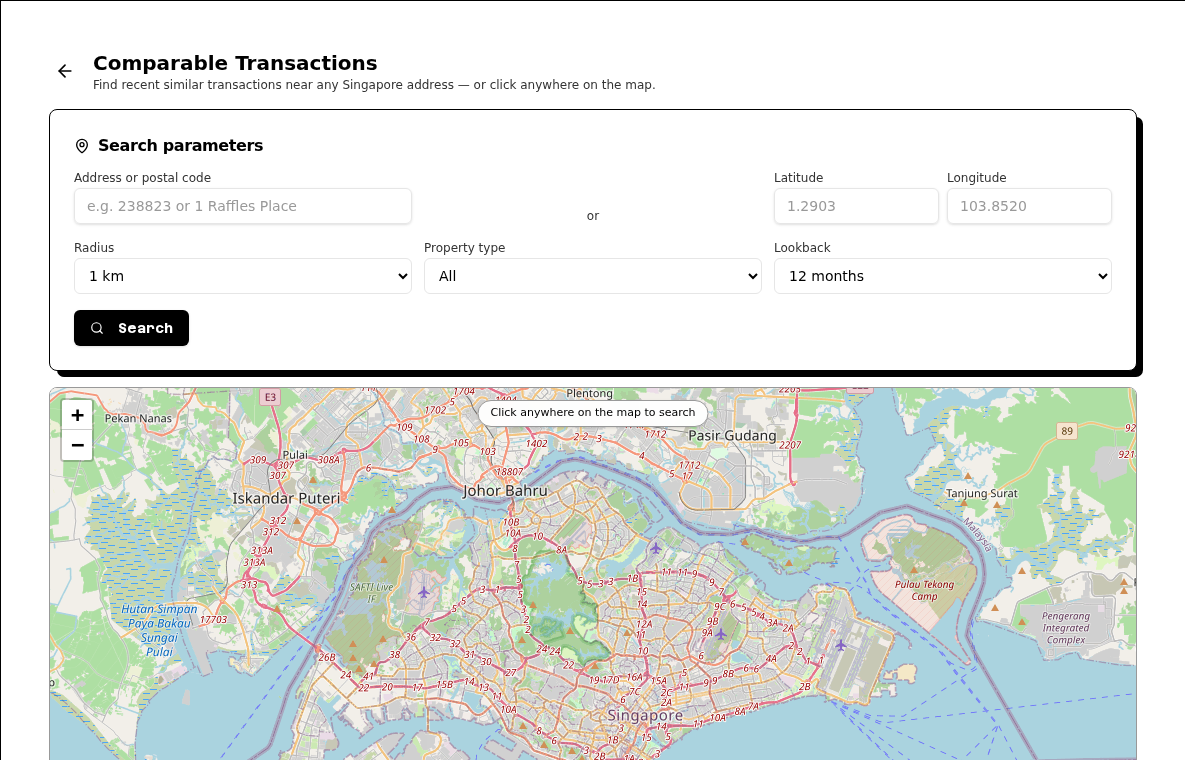
Comparable transactions are one of the most useful daily workflows. An agent can search around an address or map area, review nearby deals, and use that evidence to explain pricing in a way clients can understand. This is especially valuable when a conversation needs to stay practical. Clients often do not need a long report. They need to know what similar properties have actually transacted at and how close those transactions are to the subject property.
Location intelligence adds another layer. MRT stations, schools, and surrounding amenities affect how clients perceive value, convenience, rental appeal, and long-term suitability. A map-based view helps agents explain these factors without treating them as vague selling points.
Data provenance matters as well. Market datasets are only useful if the user can understand where the data came from, what it represents, and when it was synced. Crow Agent Suite includes a data sources view showing dataset publishers, licences, attribution, and sync status. That is a practical feature for agents who want to avoid unsupported claims and explain evidence responsibly.
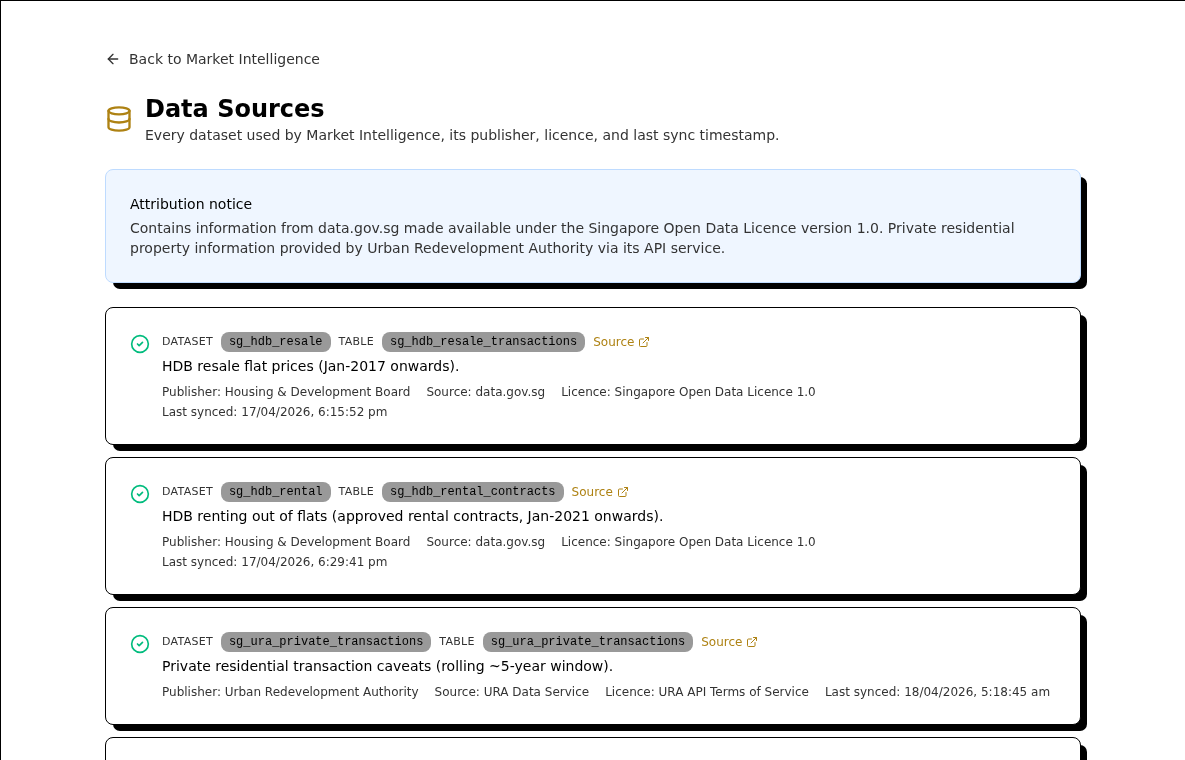
For agencies, this market intelligence layer can standardize quality. Instead of every agent building their own spreadsheet or relying on screenshots from different sources, teams can work from a shared product vocabulary. The result is not that every agent gives the same advice. The result is that everyone starts from a clearer evidence base.
AI assistant and calculators
Crow Agent Suite also includes an AI assistant for real estate agents and practical calculators for agent work. The AI assistant is positioned as a productivity layer across CRM and Singapore market data. It can help agents ask questions, retrieve context, and move faster through common research or client preparation tasks.
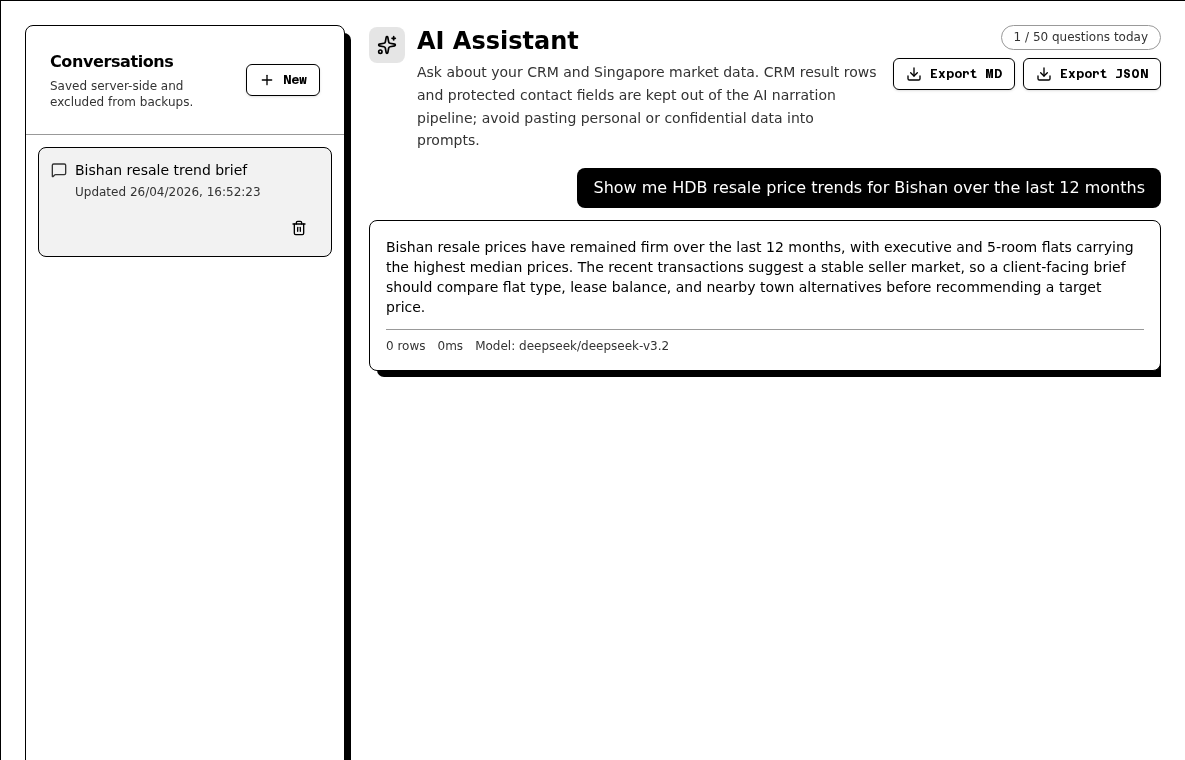
The safest way to think about the AI assistant is as a support tool, not a replacement for professional judgement. Real estate advice still requires agent responsibility, client context, regulatory awareness, and careful communication. The AI assistant can help summarize, search, draft, or reason across available context, but agents should verify important claims before sending them to clients.
This is especially important in property. A small error in affordability, stamp duty, eligibility, tenure, loan assumptions, or comparable selection can change a client's decision. Crow Agent Suite's calculators, such as stamp duty and mortgage affordability tools, are useful because they turn recurring questions into structured workflows. They help agents prepare for conversations about BSD, ABSD, SSD, down payment, loan amount, maximum property price, and TDSR utilization. They do not remove the need for financial advice where appropriate, but they make early conversations more concrete.
The AI and calculator layer matters because the best agents are often busy, and busy agents need speed without losing discipline. A workflow that can move from CRM context to market evidence to a client-ready explanation is more useful than a disconnected chatbot.
Who Crow Agent Suite is for
Crow Agent Suite is relevant to several groups in the Singapore real estate industry.
Individual real estate agents can use it as a personal operating system. The website helps them present a credible brand. The CRM helps them manage contacts, deals, follow-ups, property inventory, and commissions. Market Intelligence helps them answer client questions with evidence. The AI assistant and calculators help them reduce repetitive work.
Property teams can use it to create a more consistent workflow across agents, assistants, and team leads. A team may want shared visibility into pipeline status, lead handling, follow-ups, market research habits, and website quality. Crow Agent Suite gives that team a common set of tools without forcing every agent into a generic CRM designed for a different industry.
Agencies can consider business deployments when they need seats, roles, centralized billing, SSO options, and internal workflow consistency. The product page references business features such as company accounts, owner, admin, agent, and assistant roles, Microsoft or Google SSO setup, centralized per-seat billing, and volume or invoice options. Those are the kinds of controls agencies usually need before software becomes more than an individual subscription.
Agency-owned deployments are also possible through custom hosted instances. This is relevant for agencies that want a dedicated instance, custom features, branding, integrations, workflow tailoring, data residency review options, migration support, or a direct engineering relationship with Crow Tech. That path is different from an individual agent subscription. It is a scoped technology engagement around the Crow Agent Suite foundation.
The suite is not only for top producers with large teams. A newer agent can benefit from having a professional website and disciplined CRM from the beginning. A mid-career agent can benefit from reducing spreadsheet sprawl and making follow-ups more reliable. A senior agent or team lead can benefit from a more structured view of pipeline, team activity, and market evidence.
Why it matters for agencies
Agencies face a different version of the same fragmentation problem. At the agency level, inconsistency becomes expensive. One agent keeps excellent notes. Another stores everything in WhatsApp. One team has a good market analysis process. Another depends on manual screenshots. One agent's website looks current. Another profile has outdated achievements and stale listings. When processes vary too much, clients receive uneven service and managers have limited visibility.
A real estate CMS Singapore product combined with a CRM and market intelligence layer can help agencies standardize the operational basics:
- Agents can maintain a professional public profile and website content.
- Leads and contacts can move into a clearer CRM workflow.
- Follow-ups can become visible instead of depending only on memory.
- Deals, property inventory, and commissions can be tracked in a structured way.
- Market research can use common datasets and provenance.
- AI assistance and calculators can support repeatable client preparation.
This does not mean software replaces training, compliance, or management. It means the agency has a stronger operating surface for those things. Training is easier when everyone can refer to the same CRM stages and market tools. Quality control is easier when client evidence is not scattered across personal spreadsheets. Reporting is easier when pipeline and follow-up workflows are structured.
For agencies competing in Singapore, this matters because clients are increasingly informed. Buyers and sellers can find data, but they still need interpretation. The agency that combines professional presentation, fast response, and grounded market evidence has a stronger client experience than the agency that relies only on individual memory and manual effort.
Privacy, security, and tenant boundaries
Real estate data is sensitive because it combines personal identity, financial intent, property details, negotiation notes, and timing. A CRM may hold client budgets, family requirements, investment preferences, viewing history, sale urgency, and commission expectations. Agencies also need clear boundaries between agents, teams, admins, and company-level views.
Crow Agent Suite should be evaluated with those realities in mind. The product positioning references protected CRM fields, company roles, SSO setup options, centralized billing, custom hosted instances, and data residency or security review options for agency deployments. Those are relevant signals, but they should not be read as blanket certification claims. The correct next step for an agency is to review the specific deployment model, user roles, data boundaries, access control requirements, import process, and support model with Crow Tech.
For individual agents, the main practical point is discipline. A CRM is only useful if it is maintained carefully and used responsibly. Sensitive client notes should be treated as confidential business records. Market evidence should be checked before client use. AI-generated drafts should be reviewed before sending.
Pricing and starting point
The Crow Agent Suite product page currently presents individual monthly and yearly options, a 7-day free trial, and business or custom deployment options for agencies and company accounts. Because pricing and packaging can change, the best source is always the live Crow Agent Suite page.
For an individual agent, the decision is practical: do you need a real estate agent website, property agent CRM Singapore workflow, market intelligence, and AI tools in one place? If yes, the product is worth evaluating against the cost of maintaining disconnected tools and the time spent rebuilding client context manually.
For an agency, the decision is broader: do you want a shared workspace for agents, teams, market evidence, website management, and client workflow? If yes, the business or custom hosted options are more relevant than a single-agent plan.
FAQ
Is Crow Agent Suite a Singapore real estate CRM?
Yes. It includes CRM workflows for contacts, deals, follow-ups, property inventory, commissions, and analytics. The difference from a generic CRM is that it sits alongside a real estate CMS, Singapore property market intelligence, AI assistance, and calculators.
Does Crow Agent Suite include a real estate agent website?
Yes. It includes a public agent website and CMS for profile content, listings, testimonials, awards, photos, page sections, analytics-related settings, and domain management. This makes it useful for agents who want a professional owned web presence, not only a portal profile or social media page.
What market data does Crow Agent Suite cover?
The Market Intelligence module includes Singapore-focused tools for HDB resale analytics, HDB rentals, URA private transactions, new launch pipeline records, private developments, CEA transaction history, price indices, comparable transactions, location intelligence, and data source provenance.
Can Crow Agent Suite help with HDB resale analytics?
Yes. It includes HDB resale dashboards for price trends, transaction volume, flat types, and town-level analysis. Agents can use this evidence when advising buyers, sellers, upgraders, and families comparing towns or flat types.
Does Crow Agent Suite include URA transactions and CEA transaction history?
Yes. The product includes private residential transaction analysis using URA caveat data, new launch records, and a CEA transaction history view for salesperson and property transaction records.
Is there an AI assistant for real estate agents?
Yes. Crow Agent Suite includes an AI assistant designed to help agents work across CRM and Singapore market context. Agents should still verify important outputs and use professional judgement before advising clients.
Who should use Crow Agent Suite?
It is built for individual real estate agents, property teams, agencies, and agency-owned deployments. Individual agents can use it as a personal workspace. Teams and agencies can use it for more consistent CRM workflows, market evidence, roles, billing, SSO options, and custom deployment needs.
Final view
Crow Agent Suite matters because the work of a Singapore real estate agent is no longer only about access to listings. It is about being findable, credible, organized, data-literate, responsive, and consistent. A real estate agent website helps with the public brand. A property CRM helps with execution. Property market intelligence helps with evidence. AI and calculators help with speed.
Those pieces are stronger together than apart. For agents and agencies that want a focused Singapore real estate CRM, real estate CMS Singapore workflow, HDB resale analytics, URA transactions, CEA transaction history, comparable transaction tools, and an AI assistant for real estate agents in one product, Crow Agent Suite is built around that exact operating reality.

Not quite ready for a consultation?
Drop us a message, and we'll respond with the information you're looking for.
